Into the Wilderness: Story 10
Five couples, two single fathers, a single mom and an aunt- we were all seated in a wood paneled B&B living room on over-stuffed country sofas and chairs, mostly staring at our fidgeting or folded hands in our laps. We were together because we had something in common- our teens were deep in the woods not far from where we sat.
We were at the Blue Ridge parent’s workshop intended to help confused and flailing parents, like me, find our way through our child’s healing and our own. It’s a necessary exchange: your child goes to wilderness therapy and you, the parent, enter your own wilder realm. While they trek off trails, we trek the wooded places of our minds. They encounter pesky mosquitoes and curious bears, apt metaphors for the annoying guilt we swat away or the hairy, growling thoughts testing the limits of our strength.
Around the circle at the workshop, we introduced ourselves and where we were from, gave our child’s name, which group they were in and how long. Ours: Chuck and Cheryl, New Jersey, Catina, G7, 55 days, 20 hours, 30 minutes and about 17 seconds, not that we were counting. Next, we shared our hopes and fears for our children. You can guess what they were: I hope this works; I’m afraid it won’t. Around the room we went, a twine of shared emotion.
Eventually, we practiced “checking in,” a skill our teens had mastered. Checking in is one of the three pillars of Blue Ridge Therapeutic Wilderness, along with back-packing and bow drilling. The five-part check-in structure begins with “I feel” and moves through self-reflection to the thought that sprouted it. It works. Not only does it bring hidden feelings to the fore, but it also connects you to your body’s response and grounds you in what you can and cannot control.
My feelings were clear to me. Pain smoldered inside me. With my daughter in wilderness, my old wounds had become inflamed. I had to turn inward to help my daughter heal.
I grew up in an upper-middle class neighborhood in Tulsa, Oklahoma. Our beige-bricked, one story house sprawled on a wooded lot, one of the first in a new subdivision expanding south of the city. By all appearances, I was a lucky girl. All of my needs were met. I went to a “good,” though overly homogeneous, school. I took ballet lessons five days a week. We belonged to a secluded country club where my father golfed while my brother, sister and I splashed in the sparkling pool.
But. We were a family disconnected. Anger crackled below the surface. We rarely, if ever, had fun together. My father, a Texan who grew up poor with a strict and downtrodden mother, alone while her husband helped build the Panama Canal, was a disciplinarian. I went to school with the bruises and hand prints on my legs and buttocks hidden beneath my beautiful clothes. And there was an uglier reality: I had been abused by an older relative, a secret my family denied until he came forward more than 40 years later, when my father was dying, to confirm its truth. This reality had raged inside me for years, and before I worked actively in my own healing, I was a snapped twig, waiting to ignite.
Carrying secrets such as these results in destructive coping mechanisms. I had my share. I became obese in my 20s. I know of no better method for social distancing than being fat. Some people wouldn’t shake my hand; others would turn away. At work, several people only began speaking to me when I lost over 100 pounds. It was as if I had been invisible and suddenly was seen.
After losing weight, I turned to other ways. I flirted with wine as a comfort, but tackled that before it spun out of control. I worked too much, too long, channeling my feelings into logic and ambition. I rarely slept because the dark memory demons came out to play. Thanks to good therapists and coaches- and you know who you are!- by the time Catina was in wilderness, I had done the work. I had healed as much as a person could heal.
Or so I thought.
I had protected my daughters fiercely. But this reality prevailed: trauma can be intergenerational. Trauma can pass, without intention, from parent to child.
And so it had been. When Catina was 2 1/2, our babysitter had, without telling me, left Catina with her brother while she ran an errand. He had asked her to take a nap on the couch with him and had pulled down her pants to spank her naked bum. I learned, thankfully, because Catina refused to go to the babysitter’s the next day. She yelled at her and hid behind my legs. I kept Catina home for the day and asked her why she was angry. Catina told me she didn’t like the babysitter’s brother. I had no idea she even knew him. I had never met him. Being a survivor, I had the instinct to grab two dolls and hand them to Catina, saying, “let’s play a game, show me why you don’t like him.” And Catina acted out the entire incident. She never saw that babysitter again, and Catina went to her first therapist.
In the cocoon of the woods, Catina recalled this memory. Her hand-scrawled weekly letter recounted the details. And that thrust me back to my own. Intergenerational trauma is a psychological theory which says that trauma can leave a “chemical mark” on a person’s genes which is then passed on. Trauma doesn’t change a person’s genes, it mutates them, and is, therefore, “epigenetic.” Simply put, it means that the experiences of parents and grandparents can impact the health, behavior and emotional expression of their children. The science is still young and in some debate, but gene markers are being studied on descendants of the Holocaust, Rwandan genocide, Khmer Rouge killings, Ukrainian Holodomor and African-American slavery survivors. Patterns are emerging: children of trauma survivors have a higher likelihood of depression, anxiety disorder and PTSD. Of course, nurture plays a role as well, but the science is promising.
So while Catina was in wilderness recalling her own dark memories, mine flared. It was not lost on me that Catina’s almost abuse was at the same exact age as mine. Back at the parents’ workshop, that reality made my check in multilayered. I was experiencing the deepest form of enmeshment parenting- which describes a relationship with unclear and easily penetrated personal boundaries. Enmeshed parenting may lead to feeling your child’s emotions and that often leads to jumping in to fix, which then leads to the child not learning how to manage discomfort or pain. Which leads to negative coping mechanisms. Which leads to poor behavior. Which leads to… well, you get the picture.
My check-in said that I was excited to see my daughter, nervous for the day ahead, anxious about her progress. In tracing that to the thought, I easily saw the relationship of my own self-perceived brokenness to my daughter’s experience. I left the workshop and headed into the woods to see my daughter after weeks of separation knowing more about myself, knowing how enmeshed parenting inhibits a child’s growth and knowing how my own behaviors and coping mechanisms had been the perfect kindling to spark my daughter’s life struggles.
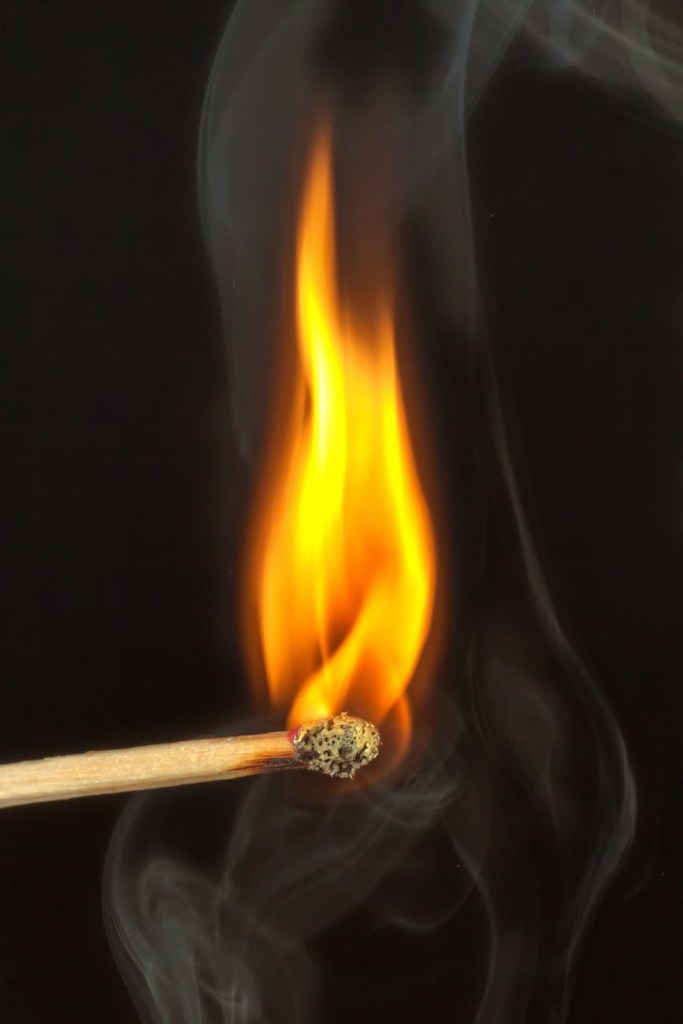
In addition to checking in, the kids learn how to start fire using homemade bow drill sets. Fire is so elemental. And yet so hard. That is one of the reasons they do it. Making the implements of fire becomes a parallel process to their own healing, each piece of the bow drill set, each step in making it a connection to their own issues and processes. Each piece has to be crafted just right: the base board notched and steady, the spindle smooth, the bow curved, the string taut and the drill hole perfectly fitted. These are the conditions for creating fire.
We sat beneath the central tent while Catina worked on her bow drill set. The teens struggle through it, a mirror to their lives. Frustrated with mastering the curve of the base board? Then look inside: where do you get frustrated? Unable to stick with it because it’s too hard? Look at how often you have quit. The flame itself becomes a symbol of healing. And here is how I saw it: By learning to create fire, my daughter would be able, like a Phoenix, to rise from the ashes of her former life. And with her, I would rise too. With wilderness, we were able to flame our healing rather than our hurt.
 Walk the Moon
Your honesty, housed in writing perfection, is simultaneously jarring and inspiring. Thank you for continuing to share your story and Catina’s. Having worked as a facilitator with family members impacted by addiction for years and having traveled that journey myself with 2 family members, I know long term success never happens unless EVERYONE changes. Congratulations on everything you’ve done for your daughter AND for yourself.
LikeLiked by 1 person
Your words are fire too. Burning through to your inner truth. Revealing the white hot bone at the core. Brave and bracing, and inviting those with pain to step into the ring of fire as well.
LikeLike