A Raising Autism Blog
The Italian tour over, we were back to “regular” life. I was still working at this time, though I’d lose my job just a month and a half later, an event compounded because I was in the midst of my daughter’s challenges. I remember one particularly bad day. I always worked through the chaos— no slacking for me! I had started work before 7 am and was navigating the usual back to back meeting schedule. Now 4pm, I met with my temporary manager. When he asked how my family was, I choked on the sudden tears. “Not good,” I said. “Do you need time to gather yourself?,” he said and, then without pause, moved on to agenda items.
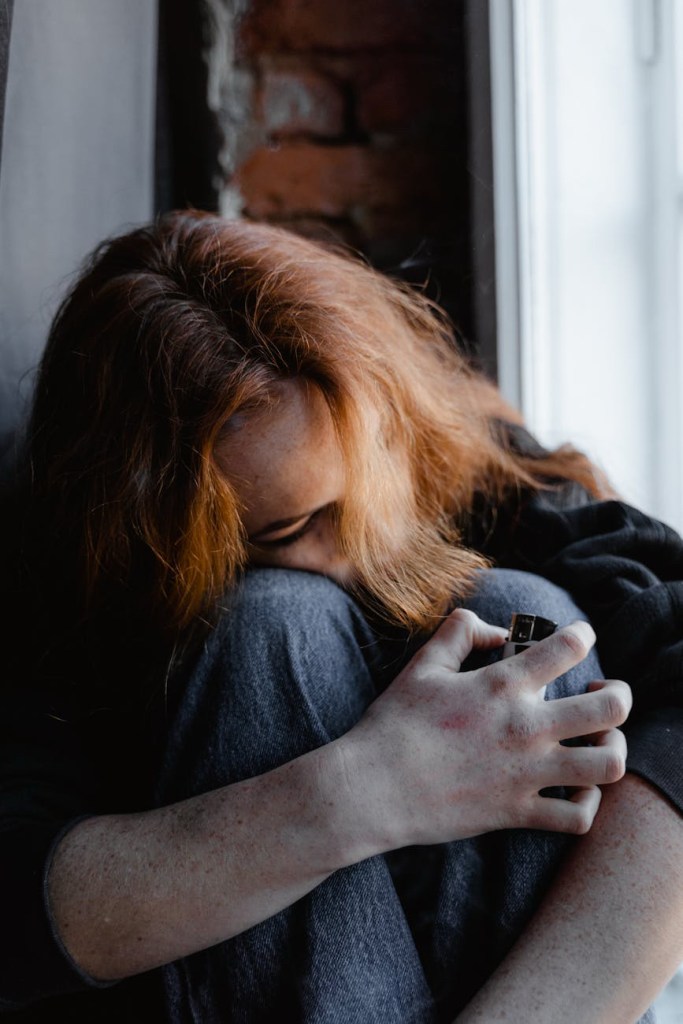
Upstairs, my daughter swam in her misery pool. It enveloped her, pulling her below the glassy surface of life. Below the water, she floated in stasis, her wide eyes blurred by the water’s bent prism. We couldn’t get her to surface, no matter how many ropes we tossed to her.
Her psychiatrist raised her medication. Then raised it again. Then again. (Years later, we learned she was taking too much of this medication. It actually doesn’t gain efficacy with a dose above a certain amount.) When this didn’t work, she was put on Abilify, a medication with terrible side effects. It creates hunger so profound no food can satisfy. She ate packages of Costco-baked croissants, jars of Nutella, Chinese take out entrees, sushi. She gained pounds quickly. Did the medicine improve her outlook? Marginally.
We rallied on.
Each day was measured by her mood upon waking. If she said nothing, we silently hoped for a calm day. When she awoke scowling, we knew rage and tears would follow. “You never support me,” she’d accuse. I took to hiding at these times. I sat outside under the deck awning, listening to podcasts. My sister had bought me earphones to help me disconnect and find peace. I wore them all day long, my pseudo sensory deprivation chamber. With them on, I could disappear into Podcast World, a storytelling space only I could hear.
The days dragged on. Would today be explosive or quiet? I snuck around my own house trying not to be heard. If she found me, I became a target. She’d say, “why did you have me?”— meaning why had I borne her. “You hate me,” she’d accuse. “You wish you’d had someone else,” she’d cry. “Of course not,” I’d say. “I only want you to be happy.” “Yeah, sure,” she’d say.
I stayed busy. I looked for a new job, ran my fitness business, wrote, sold clothes on EBay and Poshmark, cleaned out closets and drawers, held garage sales, cooked, cleaned house. I was the spinning ballerina in a jewelry box. Exposed to light, I wheeled endlessly through the day, unable to stop until darkness came. Only then, and my daughter was back in bed, could I shut the lid on my endless movement. Unable to sit still long enough to watch TV or read, I climbed into bed, put on my headphones and suspended myself in Podcast World all night long.
Why do some autistic children struggle to become adults? Adulthood requires functional skills that may be challenging for them. Take executive functioning. Skills such as time management, planning, organizing and starting and completing tasks can be difficult for some autism types, especially if coupled with ADHD. Conversely, an autistic young adult may have these skills in overdrive— meaning they are extremely rigid and regimented around these functions. This was my younger daughter. She had to wash her sheets on a specific day and time, and this task had to coincide with other required activities, such as vacuuming and dusting. If life became unpredictable— which it often is— she froze, unable to move forward at all. “You can dust tomorrow,” I’d say. “No, I can’t,” she’d wail. These success skills became unmanageable when held too tightly.
Some autism types struggle with communications and social interaction, especially if masking isn’t a strength. Adult life success depends on social awareness— being able to pick up language and emotional cues, as well as understanding social dynamics and relationships. This area is particularly difficult for my younger daughter. When she was 10, and not yet diagnosed, she confessed one day, “I can’t read people’s faces.” Think how much is lost when this skill isn’t present? At work, you may not sense if you’re interrupting someone or you may not pick up cues not to enter a conversation or to raise an issue. Some signals are extremely subtle.
And what about sensory challenges? Noise and bright lights can overstimulate neurodivergent minds. Dorms, libraries and workplaces rarely have privacy space. Many autistics also have severe anxiety. Enter any of the crowded spaces mentioned above, and anxiety soars.
How do you manage this in a world with few supports? This is another challenge. Autistic kids can access many supports in their school systems or through health care. These disappear after high school graduation. Most colleges, for example, leave accommodations up to professors. Unfortunately, I’ve seen most professors don’t care. They have no experience with autism needs and see the issue as one of choice or perseverance rather than inherent limitations. If autistic young adults are unable to advocate for themselves, and many are unable to do this, then support evaporates.
This was the world my daughter entered at college. Not once during her month and a half at university did any instructor raise an issue on her lack of attendance. My daughter had registered for available support services. She had a “counselor.” They could not speak to me because of privacy reasons, but they could have reached out to my daughter.
This support gap is the most significant issue. We live in a world that assumes everyone learns and works in the same way. Our schools and workplaces are fashioned for neurotypical people. Perhaps our autistic young adults don’t struggle so much as enter a rigid adult society not designed to flex around differences. This is what I have seen.
This is what thrust a highly successful high school student into the depths of anxiety, despair and self- comparison. My daughter had seen a world she believed she could not succeed in.
These factors and not inherent inability led to my daughter’s retreat into hopelessness. I had never seen her struggle at such a profound level. Even worse, once she fell into the crevice, she could not find her way out.
I was as frustrated, angry and helpless as she was.
More to come in part 3.
I would love to hear from you, even if, especially if, you disagree. Perhaps we can bring back the American tradition of debate. Please like and share this blog with others. Subscribe to receive it by email and go directly to the Walk the Moon website (www.walk-the-moon.com) to peruse the full collection of articles and updates. You can email me from the Walk the Moon website as well.
 Walk the Moon