Excerpt from You’re Always 39: How to manage and recover from late career job loss and reinvent yourself, my book coming out in October 2026!
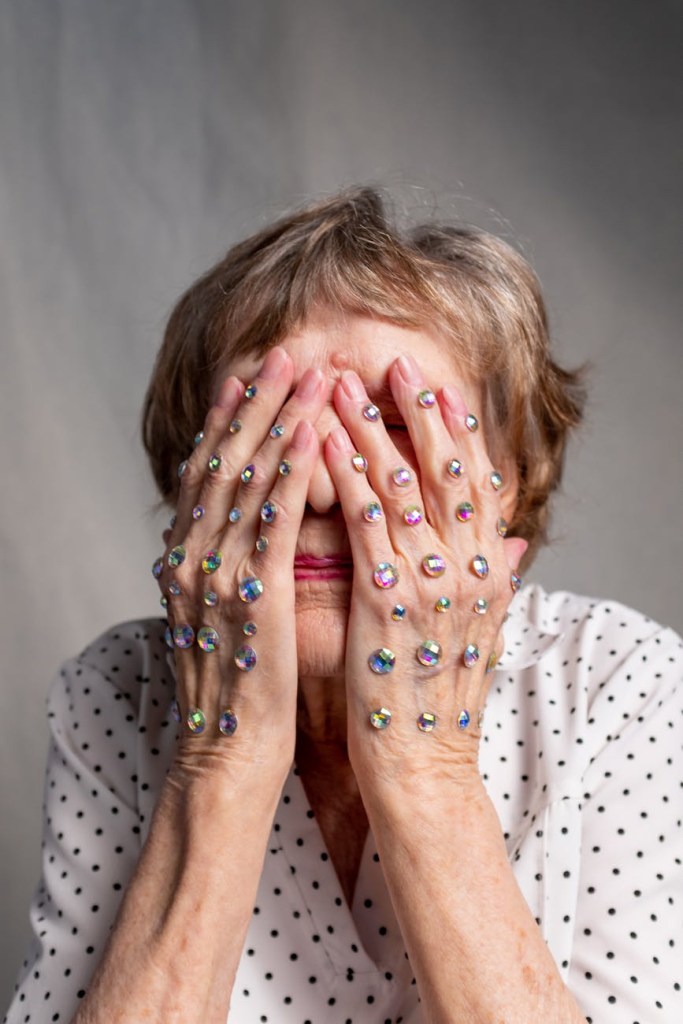
Around ten years ago, I was in a video meeting focused on fixing an issue with a struggling product. Customer sales and satisfaction had plummeted, affecting the company’s core business. While the solution to this problem wasn’t easy, I believed we had adequate information on what was causing the decline. We weren’t giving customers a positive purchasing experience, nor had we inspired them to buy in the first place. I spoke up in the meeting to share this perspective. The video stream went absolutely silent. Not one person acknowledged my comment, and the meeting resumed. Around 10 minutes later, a younger man spoke up, repeating exactly what I had just said. Rather than silence, he received praise for “his” idea. Did I speak up to say, “hey, I just said that”? No, I didn’t. I had experienced this invisibility before and knew speaking up had as many risks as staying silent. Mostly, I wanted to avoid the stigma many women experience when they speak up, challenge or correct: the angry, aggressive woman, the “bitch.”
Most professional women have experienced a similar situation. A woman challenges a point in a meeting. Everyone goes silent. A man makes the same point and praise erupts. “Exactly right, point well made,” management says. Afterward, side talk is about “her” aggression and “his” leadership. Author and Activist Rebecca Solnit tells a story about one of these incidents. She had just published a book on photographer Eadweard Muybridge. At a party, a fellow guest, a male, unaware that she was the author, struck up a conversation and chose her book as the topic. Although he had not read the book, he told Solnit what her book was about, interrupting her when she had tried to tell him she was the author. Finally, another woman at the table broke into the conversation, telling the man, “she wrote that book.” Solnit eventually shared this experience in another piece, “Men Explain Things To Me.” She posits that women fight two battles: to have the permission to discuss a topic and to have the right to speak, be listened to and validated without being interrupted, ignored or spoken over. 1
Why does this happen to highly educated, obviously intelligent women? Women are beset by cultural stereotypes and expectations most men don’t face. Aging women have a long history of stereotypes. Fables, folklore, even current culture position aging women as dried up, no longer attractive or useful, or even as angry, scheming or evil. The film industry calls this the “hackneyed hag,” a popular horror trope.2 Norma Bates is the classic bad grammy of horror movies. In the “Monster” Netflix series, serial killer Ed Gein’s mother, on which Norma Bates is based, depicts a vengeful old woman full of wrath— sadly, Gein’s real-life mother was not well— as the reason for her son’s proclivity for defiling the dead and murdering women. Gladys in the film Legion, for her brief appearance, is a scary grandma, sweet one moment and terrifying the next. Jessica Lange in Hush is an aging mother-in-law villain. M. Night Shyamalan’s Visit depicts “Nana” as even more disturbing than “Pop Pop.” Matriarch Ellen in Hereditary was the leader of a demonic cult and the source of the family’s ugly inheritance. Isn’t it interesting how many negative images of older women are associated with horror? Meanwhile, Jason of Friday the 13th fame is eternally young, though his chronological age would be 79.
Some older and particularly outspoken actresses have been labeled “ugly.” Whoopi Goldberg and Rosie O’Donnel have been maligned in media and political circles, though the criticism seems more politically motivated with age as an additional barb. Aging female actresses have fewer opportunities for roles, positive or negative. Older male actors, often referred to as “silver foxes,” play any number of roles requiring distinguished-looking actors. This double standard is well known in Hollywood. Demi Moore depicted the struggle brilliantly in Substance. Her character, still fit and beautiful, though aging, is fired from her show to be replaced by a youthful version of herself, literally.
Another cultural depiction for aging women is reductive: older women exist only to serve as mothers and grandmothers. This is the older woman complaining about her son or daughter never calling her, as if life revolves completely around her offspring. Or it’s the grandma completely absorbed with her grandchildren, doing nothing else but doting on them. This sends a capability message. What can older women do? Not much.
Closely related is the silly old woman stereotype. Think of the gossiping biddy, the purple-haired, eccentric, the doddering matron and the harmless and helpless “little old lady.” All of these position older women as crazy, confused, forgetful, frail, and pitiful caricatures. Sometimes, they are interfering and annoying, to be swatted away and ignored. All of these portrayals make older women irrelevant, unintelligent and incapable. At its worst, these depictions are nothing more than comic relief.
A while ago, I found a Reddit thread3 solely dedicated to discussing whether older women in people’s offices are mean. The Reddit contributor starts the string by asking if other people have mean older women in their offices. The contributor is seeking support and advice. A discussion ensues about the value of older working women. Some responders have no problems at all. Others confirm the mean old lady idea. One generalization emerges— the older women being nice to young men and not younger women. Is this true or a social stereotype influencing their perspective? Do older women need to mentor younger women at work? While I can understand the expectation, many older women find that helping younger women progress at work results in training their younger, and cheaper, replacements. Are the same expectations applied to older men? This doesn’t come up in the string.
How do these unfortunate images play out in the workplace? They enable stereotypes, which we’ll talk about in depth in chapter 4. Simply put, stereotypes enable the bias many aging women experience. They are the unspoken reason why women-focused age discrimination persists and continues to grow.
Throughout their careers, women are labeled. They are too young or too old. Too experienced or not experienced enough. They are too ambitious, too outspoken, too aggressive, too angry, too emotional, too friendly, not friendly enough. They smile too much. They don’t smile at all. Have you ever heard a man told to smile more or less? Or has a man been told he’s “pretty when he smiles.” I doubt it. Criticism of women, the double standard, runs deep. Continue to read the chapter when presale books come out this spring!
I would love to hear from you, even if, especially if, you disagree. Perhaps we can bring back the American tradition of debate. Please like and share this blog with others. Subscribe to receive it by email and go directly to the Walk the Moon website (www.walk-the-moon.com) to peruse the full collection of articles and updates. You can email me from the Walk the Moon website as well.
 Walk the Moon