An I-have-no-idea-what-series-this belongs-to Blog
Curling has been rocked by scandal. While I haven’t figured it out yet, or even read anything about it, the breaking news story is that the Swedes have accused the Canadians of cheating by tapping the granite rock with a finger as it passes the “hog line,” the line over which the disc rolls at the start of a roll. The Canadians won the match against the Swedes, leading one of the Swedish players to release a video showing the violation (I haven’t watched it). Curling officials have said they will not replay the video and not second-guess the in-the-game decisions of the umpires.
I’ve always marveled a bit at curling. It’s a strange mix of controlled rock rolls and smoothing the resistance for or guiding the direction of the rock to maintain or slow down movement. This is done with brooms, and no, it’s not Cinderella on ice. It’s called a “gentle person’s” sport (yes, I modified from gentlemen’s because women do play the game). From my perspective, it’s a bit like watching golf on TV: slow moving and minute, totally dependent on absorbed interest rather than the raucous finality of football touchdowns or hockey goals.
This got me to thinking. If curling has a role in the Olympics, perhaps cornhole is a contender for the summer games.
Hear me out.
A comparison between curling and corn hole.
Curling is a quiet, precision sport. Curlers gently slide down the ice pushing the granite disc to a bullseye of sorts. Whoever gets closest to the center wins. And this includes knocking the other player’s disc out of contention.
Cornhole is a precision sport. It’s not easy to get that floppy bean bag through the small round hole. If your “corn” doesn’t make it through the hole, it can land on the platform surrounding the hole. If the corn bag is in your way to get to the hole, you can knock it out of the way. Cornhole is admittedly not quiet but this is usually because of the libatious (is this a word?) nature of the game. Under the rigors of Olympic rules, no such fortification would be allowed.
Curling requires special equipment: magical shoes to glide AND prevent slips, brooms (natural or synthetic allowed), knee pads (optional), gloves (optional) and the special granite curling disc. It also requires ice lanes, on which two teams at a time compete.
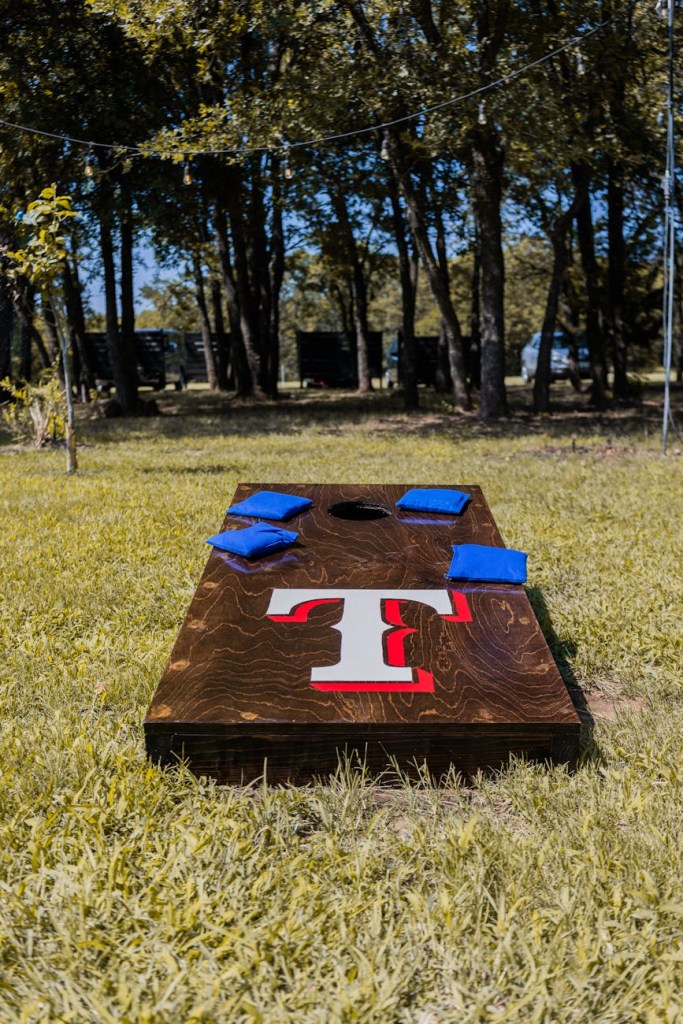
Corn hole has its own equipment too: a wooden slab into which a hole has been (carefully) drilled and support legs to create a perfect corn hole incline. I’m sure Olympic rules can designate the exact size and weight of the wooden board, as well as the length and shape of supports and the placement and designation of the hole. The American Cornhole Association already provides such specifications so precedent does exist. In fact, here are the specifications, demonstrating the rigors of cornhole sporting:
- Hole Diameter: 6 inches (+/-one-quarter of an inch). [This +/- would no doubt need to be eliminated to meet exacting Olympic standards.]
- Placement: 9 inches from the top edge to the center of the hole.
- Board Size: 47.5 to 48 inches long and 23.5 to 24 inches wide.
- Bag Size: 6 inches by 6 inches
Olympic cornhole also could designate the appropriate lane sizes and type of playing ground. Eventually, the boards could become high tech with sensors and other measurements. The curling ball, for example, has a sensor for when the player releases it. The bean bags could be similarly sensored. See how rigorous cornhole could be?
Curling requires patience and practice. The same can be said of cornhole.
Both curling and cornhole have a long history. Curling originated in 16th-century Scotland— that’s the 1500s y’all— when it was played on icy lochs (that’s Scotch for lakes in case you need the translation). Cornhole dates back to the 14th century— the 1300s!— when cabinet maker Matthias Kueperman created it to save children from the dangers of throwing rocks into a groundhog’s hole (danger to the children, not the groundhog). Curling cannot claim more auspicious beginnings.
Originally, curling was called the “Roarin’ Game,” suggesting that curling’s early days were played under tippled influence, although historians say the name came from the sound the stones make rolling against ice (wink, wink). Curling didn’t mature from casual pastime to rules-driven sport until the 1800s, with the development of the Grand Caledonian Curling Club in 1838 (Be sure to roll your r’s when saying that name!). Since curling graduated from a roaring good time to a “gentle person’s” game, I posit that cornhole can reverse its demise from children’s enjoyment to drinking game by undergoing a similar transformation.
The cornhole name came from the beanbags used for tossing into the holes. Kueperman surmised that tossing a bag of corn was safer than throwing rocks. A wise decision by Kueperman, if you ask me. At that time, corn was used for weighting items as well as food because of its plentiful availability. Curling earned its name from the arc the granite disc makes across the ice.
I personally would love to see the Olympic uniforms designed for the new U.S. Cornhole team. Would they honor its lowly beginnings as a children’s game with corn bean bags by embroidering tiny corn husks on the lapels? I really want to know.
Cornhole already has begun its journey to professional sport. ESPN has aired the American Cornhole Association’s World Championship of Cornhole X (I have no idea what the X stands for). Apparently, more than 300,000 watched the championships.
So who’s with me? Who else believes we should rally the Olympic committee to consider this aged and beloved sport for the excellence and rigor of Olympic competition? It can do no worse than rap.
I would love to hear from you, even if, especially if, you disagree. Perhaps we can bring back the American tradition of debate. Please like and share this blog with others. Subscribe to receive it by email and go directly to the Walk the Moon website (www.walk-the-moon.com) to peruse the full collection of articles and updates. You can email me from the Walk the Moon website as well.
 Walk the Moon