A Surviving Facts Blog
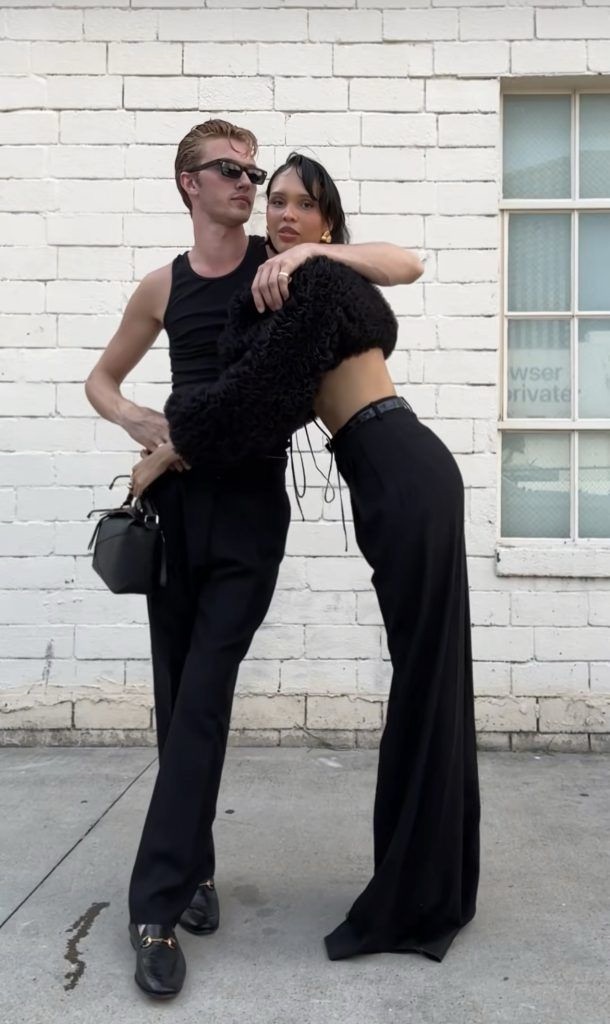
As I’ve shared before, I’ve spent too many hours— mouth agape except for muttered curse words— exploring the trad wife trend on social media. One of the early influencers in this area— although I don’t think the trad wife category really fits her— is Nara Smith. Nara, now a mother of four—achieved millions of followers by cooking everything from scratch— and I do mean “everything.” She makes her own sprinkles—wearing haute couture fashion. I’ve lost time watching her make the home-made version of Cheerios, the aforesaid sprinkles, mozzarella, butter and many other why-would-you-waste–time-making-this items. I can tell you why: it’s working for her.
Nara started her career at the age of 14 when she was “discovered” for modeling. Today, she is married to Lucky Smith, a fellow model, and they have four adorable, perfectly-formed and destined-to-be-tall children. Nara stands at 6’ and Lucky at 6’3”, so they clearly can use the top shelves in their pristine, chic kitchen (and I’m jealous about this). Nara was born in SouthAfrica and raised in Germany, though you would not know by her accent. She speaks perfect English. She narrates her carefully crafted and beautifully edited videos in a soft, sleepy voice. If I weren’t marveling how she never splashes anything on her $2500 shirt, I could fall asleep to her dulcet tones.
Nara is stunningly thin and beautiful. Four pregnancies have left no marks on her belly— either an editing sleight of hand or a skin-care miracle— and she maintains her slim, lithe self at all times. She still models professionally and also endorses various seemingly high-end products. She and Lucky seem blissfully happy— and research seems to confirm this is true, if bearing 4 children in quick succession doesn’t. She makes cooking, mothering, wifing and working look easy.
Glamorous ease is her brand. She conveys: I can live a perfectly elegant life; have everything I want in career, family and money; and look flawless in expensive clothes without sweating, leaking breast milk or dripping oil (something I inevitably do). She seems immune to the usual breakdowns we lesser mortals have. Who among us mamas hasn’t had— when covered in baby poop and crumbled goldfish (oh, she hand-makes goldfish too)— a this-isn’t-as-fun-as-I-thought-it-would-be day? Nara doesn’t seem to, bless her heart. She’s super human as well as super tall.
I know this is all image. Her coiffed persona appeals to the I-wanna-be-sexy-as-hell and be-a-perfect-mom-and-wife bunch. She has 12.4 million followers on TikTok. Yep, that number is high. Nara captured a zeitgeist of disaffected Millenials and Gen Z-ers craving a family life and domesticity they missed growing up with dual-working, single or divorced parents. Although Smith had a social presence through her modeling years, her Tok didn’t take off until late 2023 when she began posting her homemade, cultured lifestyle.
Nara’s Toks show an idealized womanhood, one easily interpreted as “trad wife.” But Nara isn’t really the traditional wife exemplified by the ballerina on the farm. Nara has a modeling career, multiple endorsements and a steady flow of her soft-spoken yet ambitious content. She claims that her husband shares parenting duties 50/50 and regularly watches the kids while she jumps into New York City for facials and photo shoots. He also regularly appears on her videos to squeeze her lemons (this is meant literally) and make cookies and toothpaste. Lucky looks at his wife adoringly and hungrily. This man is either a magnificent actor or really, really digs his wife.
Nara really isn’t doing anything wrong, though she’s been criticized for almost everything she does or doesn’t do. Apparently, the look of her hair on the back of her head nearly led to a TikTok takedown. I want to get angry at her manipulated image, but really can’t. She largely embraced the homemade everything because of severe eczema and a Lupus diagnosis.
What upsets me?
It’s not the ridiculous amount of time it takes to make Cheez-Its— who’s going to spend 7 hours on a snack?— nor the perfect body in couture clothes, nor even the fact Nara and Lucky have amassed millions doing this. No, it’s the sad fact that millions of young American women think this is real, an ideal they should work toward. The real problem is their seeking to emulate her brand.
I was always a working mom— and had no other option. My children attended day care and before and after school care and had babysitters and au pairs. The juggle was real, every day another challenge, and the constant awareness of failing my children haunted me. I can understand the desire these young women have for what can seem an easier pathway: fall back into traditional male and female gender roles, enabling them to stay home to raise children while the hubby supports his family financially. But we wise older wenches know: Women trade off innumerable power differentials with this decision. But how many families today can afford such an arrangement? Not many. It’s an upper-middle class, mostly white, evangelical family structure.
And this is where Nara has some accountability for the women buying into and seeking to emulate her lifestyle. Nara doesn’t actually live this dynamic, as she has said in numerous interviews and videos. Though she insists that she does cook everything herself and at her children’s request, Nara has created a fictional character. This character portrays a life of perfection and ease that likely doesn’t exist. No one can hand-make chewing gum, moisturizer, hot sauce, ketchup and crackers while sitting on one’s tuckus. These efforts take countless hours if done alone and wealth to hire the staff to do it for her. Nara has said she does it all and posted a video saying “look at the hands” to joke about someone else doing the work for her. The “other” hands were clearly Lucky’s.
The medium of social breaks down the third wall, as it’s called, between the narrator— Nara— and its audience. Rather than suspending disbelief, Nara’s audience extends unquestioning belief. They want her to be the idealized mama and wife of their dreams. By doing so, they can subsume themselves into the fantasy, lost for a Tik Tok moment in the so-called good life. The sad commentary is that young women idolize Nara’s depiction as the life they want to live. My generation knows otherwise. We watched our moms and grandmas suppressing their desires and ambitions to labor for their husbands and the good of “mankind.” Women couldn’t choose these duties. They were forced upon them, leading to oppression and depression. There’s a reason women in the 1950s took Valium with dry martinis.
Because today’s 20- and 30-year-olds saw their moms managing both work and home life, they have idealized domesticity. Exhausted from long work days and the second job at home, we found shortcuts, didn’t sleep trying to make it all happen or simply gave up. This is what our daughters saw. The next step to giving up work for the domestic life may seem reasonable to them. We know the financial, emotional and sexual risk such decisions lead to. We saw the abuse and social judgment cast upon women as a result of this exchange. Women only lost in this bargain. They lost self-ownership of their bodies, financial freedom, self-worth and self-determination. We older gals know this sacrifice went too far. That’s why we tried to take ourselves back. How sad some of our daughters don’t now understand this.
The Nara-idealization is evidence of our broken social system in the U.S. We allowed companies to take our lives after we wrestled them away from patriarchal standards. Our daughters saw unrewarded toil rather than freedom. We supported capitalism run amok in the name of “self-made men.” Our daughters saw men continuing to win. As we’ve seen, these men have failed to shift with the times. They cleaved to the patriarchy and financial greed, resulting in the backwards trend.
Our Korean counterparts have pioneered one remedy: never date, marry or have children at all. Simply bow out of the system completely. As American women refuse to date, marry or bear, the backlash builds— forced marriage, lack of female healthcare, downgrading typically female careers.
In one of her Toks, Nora says, while making a cake for her dad, “I don’t eat cake.” This may seem a toss off comment— she’s a thin model watching her figure— but I see it as so much more. This is a woman with ultimate discipline. She may be making a cake for her dad, but her life is her own. She carries her own power.
At least this is how I read it.
I would love to hear from you, even if, especially if, you disagree. Perhaps we can bring back the American tradition of debate. Please like and share this blog with others. Subscribe to receive it by email and go directly to the Walk the Moon website (www.walk-the-moon.com) to peruse the full collection of articles and updates. You can email me from the Walk the Moon website as well.
 Walk the Moon