A Surviving Facts Blog

This little blog of mine is hardly a threat to our government. I have a solid reader base and know both supporters and detractors read and comment. This is my microcosm of rebellion. If I took my comments to Tik Tok or instagram and spoke my fear and discontent out loud rather than in words people hardly read anymore, I may have a bigger audience and more generalized awareness of my rebellion. With writing, a dwindling art thanks to AI (none of my blogs have been written in whole or part by AI), words have become more commodity than inspiration. How sad this is.
I am both scared and fearless. Trump recently announced that people who speak out against the government can be stopped and searched, a violation of human rights and due process under the law. Hello Reichstag, jack-booted thugs mindlessly following the Fuhror’s commands.
Writing is an act of rebellion. Perhaps best known today is Maya Angelou who eloquently and vividly exposed racism’s horrors. She has taught many generations how to find their powerful voice and stand in the solidity of their truths. Maya became the voice of powerful Black womanhood and of resistance through love rather than violence. Her poems “Phenomenal Woman” and “Still I Rise” are anthems to matriarchal authenticity and profound resilience through challenge. In your darkest hour, repeat “still I rise,” and you will persevere. Her words are magical chants casting light into the world.
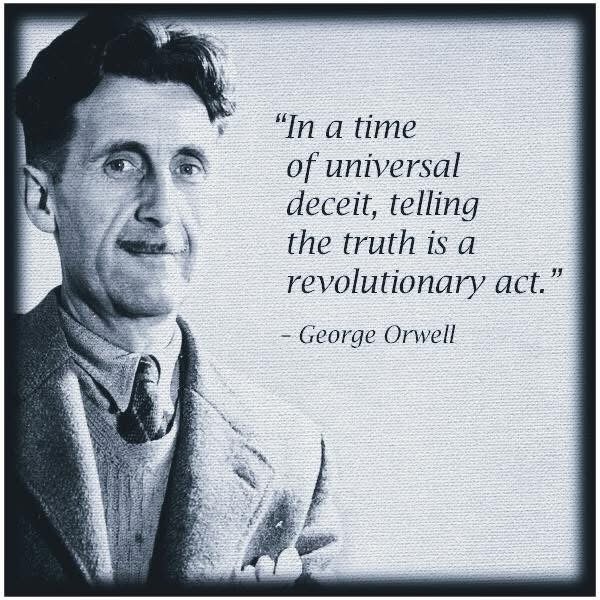
George Orwell wrote about the dystopian world we now live in, and called the book “1984.” Forty years later, the world he envisioned in 1949, when the book was published, is here. The book’s main themes of authoritarianism, mass surveillance, “thoughtcrimes,” and fake news are the horrifying hallmarks of the Trump administration. Just last week, we watched ICE kill a women without provocation. The administration wants us to distrust our own eyes and believe their distorted depictions of what happened. Most Americans, thankfully, see the actual event: an ICE agent stepped in front or Renee Good’s car and shot her three times in the head. Seconds before she had pleaded, “I am not mad at you, bro: I’m trying to get out of the way.” Orwell’s imaginary world depicted this exact dissonance between our lived experience and the state’s falsified reality. Who ever thought we would be living a story told 77 years ago?
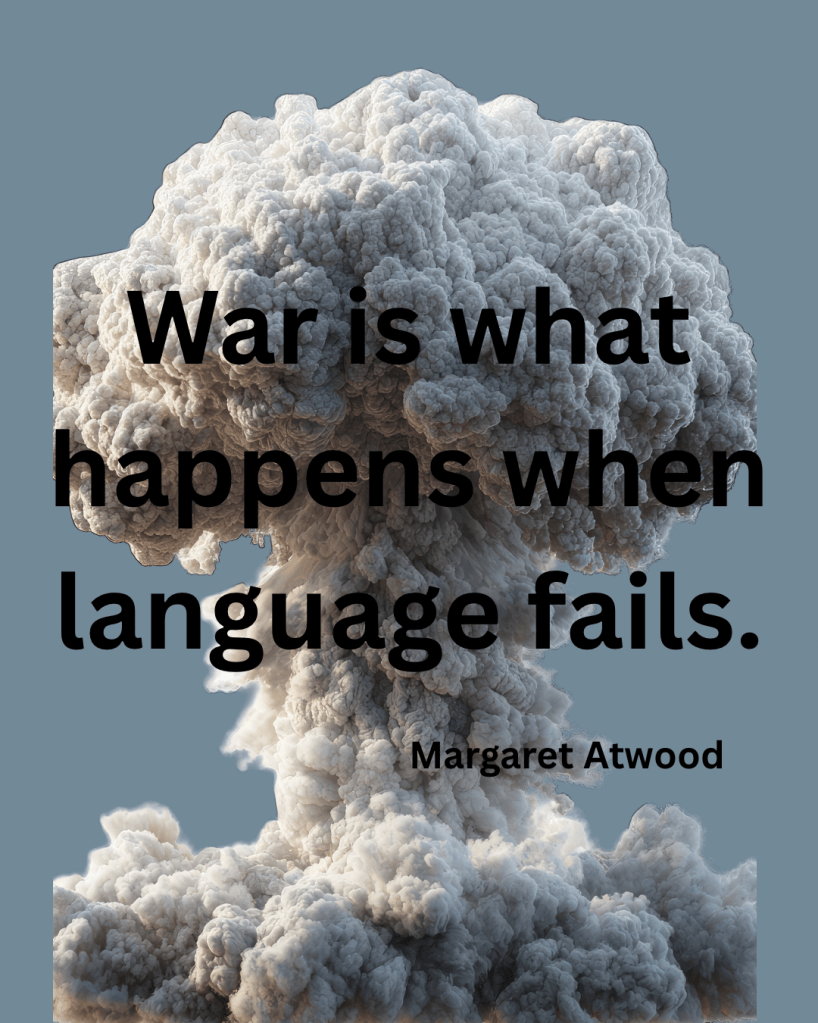
I first read Margaret Atwood’s “The Handmaid’s Tale” in 1985, the year it was published. I was on break from college. I had just graduated and had moved to New York, an Okie girl displaced into the vast wilds of the big city. I was blissfully between college and adulting— working and earning a living. I sat in the hot summer sun and absorbed every word with this silly refrain in my head: thank god this will never happen here (meaning in the U.S.). Ah, the naïveté of youth. Today, a far right Christian nationalist faction seeks to control our government. Twenty-eight states have banned abortion based on gestational stage, with seven banning abortion before 18 weeks of gestation. Women have died from being unable to receive basic medical care because the state has prioritized a growing fetus above the vessel of a woman’s body. A woman in Georgia, Adriana Smith, was suspended on life support until her baby could be born, and she could die. In states with abortion bans, both mother and infant mortality rates have soared. Atwood’s book was a warning we did not know we needed. We now live perilously close to the world she envisioned, based, as she has noted, on real-life events. History does repeat itself.
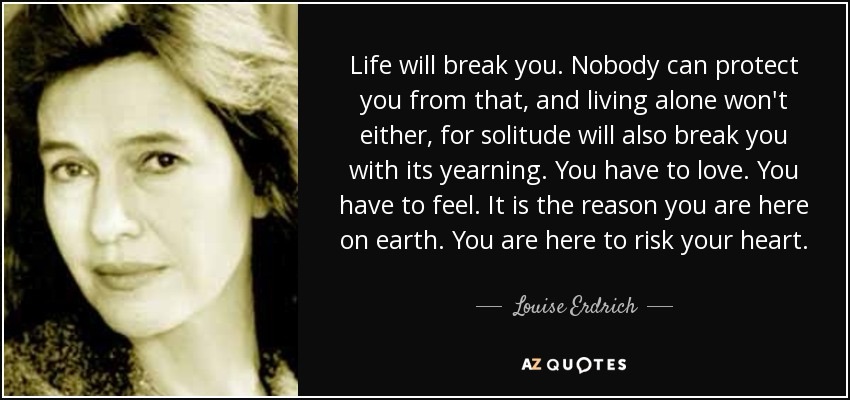
Louise Erdrich’s, “The Sentence,” written in 2021, interweaves the story of an indigenous book store clerk in Minneapolis with the murder of George Floyd and the Covid epidemic. The book explores systemic racism, the uncertainty of life and death and the risks of a homogeneous society failing to acknowledge or accept differences. Erdrich reminds us that life continues amidst enormous external upheaval, which can affect individual lives deeply. She deftly balances the fragility of life and death and how past traditions and roots can both haunt us and enable us to survive political turmoil.
Late last year, Trump issued an executive order directing the Department of Justice to put together a list of domestic-terrorist groups. The National Security Presidential Memorandum 7 targets left-leaning groups and Antifa claiming a coordinated effort by these group to undermine American values, Christianity, capitalism and people who hold “traditional,” i.e. neo-conservative family, religious or moral principles. The targeted groups do not need to be violent in any way. The DOJ can search social media, chat groups, in-person meetings, schools and other gatherings with opinions counter to the conservative Christian Nationalist agenda. Anyone who challenges this far right perspective can be listed as a domestic terrorist and can be subjected to searches, detainment and arrest simply for disagreeing with the opinions of the Trump administration.
By this definition, all of the writers listed in this blog, who used the written word to rebel against unjust political acts, could be “enemies of the state.” Already, Trump has amassed two “weaponization” (his word) working groups, including members from the intelligence community, to seek out Americans who violate the belief systems put forth by Trump, Project 2025 (and I’m sure now Project 2026) and the Christian Nationalist movement exemplified by Charlie Kirk and his widow Erica Kirk. The works of Angelou, Orwell, Atwood and Erdrich all fit this definition.
How far will Trump’s government go? With AI intelligence, bots could mine and monitor countless Americans for sharing opinions counter to the current administration. Does this put me, with my limited yet consistent blog, at risk? Could their random searches one day identify my words as a risk to the state? It’s absolutely absurd to think I could be. But the murder of Renee Good, who was neither blocking the road nor disobeying orders nor harming ICE agents has shifted the environment. I hesitate to share my thoughts.
I am small fry. Many bigger voices exist—so I am not aggrandizing what I am doing with this blog. But make no mistake, this blog is an act of rebellion. It is my personal proof that I would not have fallen for Hitler nor remained silent. I may have become part of the resistance. Who knows? With this blog, I cast my wish for a better America into the world. And I send a message that our original American values— of equal rights for all, of protecting those at risk of discrimination and harm, of the ability to challenge our government and call upon politicians to behave more ethically, of healthcare as an individual right, of a fairer economy with opportunity for all— will prevail in these dark times.
Because let’s be clear: our democracy has been decimated. It is buried in the rubble of the destroyed East Wing of the White House. It has been swallowed by the deep ocean waters of destroyed Venezuelan boats. It is frozen in the vast, icy richness of the must sought-after Greenland. It floats in the silence of the Kennedy center. In these tenuous, invisible spaces, hope exists. For if our American ideal still remains in these spaces, in our hearts and minds, we will find it again
I would love to hear from you, even if, especially if, you disagree. Perhaps we can bring back the American tradition of debate. Please like and share this blog with others. Subscribe to receive it by email and go directly to the Walk the Moon website (www.walk-the-moon.com) to peruse the full collection of articles and updates. You can email me from the Walk the Moon website as well.
 Walk the Moon