Into the Wilderness: Story 43
Lately I’ve been seeing a lot of negative commentary on wilderness and residential therapy. Paris Hilton released Hell Camp, a Netflix documentary about her treatment experience. NY Times Author Kenneth Rosen has written “Troubled: The Failed Promise of America’s Behavioral Treatment Programs.” Prolific podcaster Tiffany Reese of “Something Was Wrong” is working on an entire season on the troubled teen industry and industrialized abuse. On social, groups are dedicated to survivors of these programs.
I will not question these survivors’ experiences. Clearly, these children were harmed by their treatment programs. It is an unregulated industry, not verified by “evidence-based” research. As lawsuits and complaints grow, these programs are scrutinized and questioned.
Our experience has been different from these complaints. Simply: wilderness therapy and residential treatment saved my daughter’s life.
My daughter was headed toward delinquency when I chose to put her in Blue Ridge, a wilderness therapy program located in the Appalachian mountains of northwestern Georgia. As I’ve shared before, I did not know what else to do. My daughter had engaged in CBT and DBT therapy with local practitioners. She had participated in group therapy and other intensive programs. None had worked. She was skipping school, experimenting with substances and sneaking out at night. After consulting with her psychiatrist and psychologist, we decided to hire an educational consultant. He recommended wilderness therapy and suggested 4 programs for her. We chose Blue Ridge.
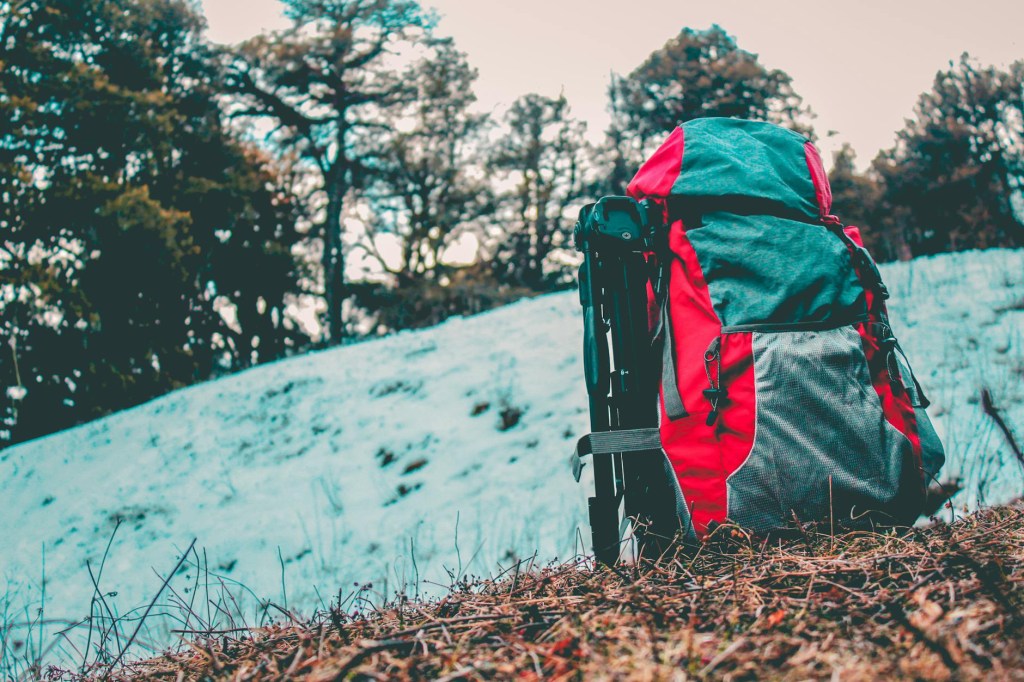
Blue Ridge is not a boot camp, and most wilderness therapy programs aren’t. While the teens live outside- the time is dictated by the program- they are supported by therapists, counselors, doctors and others. Blue Ridge required living outside 24/7. The teens are given huge backpacks loaded with supplies- tent, sleeping bag, blanket, bowl, utensils, clothes, journals, snacks and more. The principle is separation. Taking the teenagers out of the world of fast communication and modern conveniences slows them down. In the woods, clothes and makeup don’t matter. Without cell phones, they tune inward.
These programs provide intensive therapy- group, individual and other modalities. There’s so much therapy that, without other distractions, the teen’s defenses break down. They do the real work. They can’t tromp to their room and slam the door. They can’t tune out or pretend compliance. They can’t disappear after school. In the safe “container” of the woods, they focus.
In the woods, our daughter fessed to what she was hiding- and it was a lot. You can read my blog entry Twenty-One to learn more (I recently republished it). Teenagers’ brains haven’t matured. They become angry and hide rather than admit to decisions that led to harm that in no way and never could be their fault. That was the case with our daughter. The teenager mind couldn’t see that she wouldn’t be in trouble for telling the truth- and we were not a family that participated in corporal punishment or emotional abuse. We always talked openly.
I don’t know how many years would have passed before our daughter had shared the assault that emotionally felled her. During these years, she would have continued to self-medicate and practice the edge of danger. She could have become an addict or died. Our daughter agrees with this assessment.
After the initial shock and resistance, she loved wilderness. She found something beautiful there: herself. She learned she was capable of self-care. She learned to seek support. She learned to open up. Her therapist was amazing.
We parents also learned. Through parent workshops, we figured out how to help our teens move from the “red zone” of anger or the “blue zone” of depression to the “green zone” of balance and communication. We identified our own negative experiences that we had used to cope, and we understood the family behavior patterns that prevented us from growing together. We met with our own therapist weekly. We also communicated with our daughter through letters. Toward the end of the program, we also spent a day and night in the wilderness with her. We marveled at our daughter’s ability to build a fire, cook food and construct a tent. She too was proud of these new-found strengths. At night, we stretched out on the mountain ridge and traced constellations.
In “Hell Camp,” Paris Hilton says she was “verbally, mentally, and physically abused on a daily basis.” She attended different programs from the ones my daughter did. Our daughter experienced none of these abuses at Blue Ridge. Which brings me to my next point. Not all programs are the same. Parents must do their research. An educational consultant can be a great help by weeding out programs with claims of abuse- though an unbiased and ethical consultant is a must. You must ask if they personally gain from the placement. Then a parent must talk to other parents with children in these programs. And, ideally, a parent should talk to teens who’ve been in the program. Web searches and social media digging will uncover any complaints.
In addition, these programs should be regulated. Injuries, defections, breakdowns should be reported. Spot inspections would be ideal. Research to validate them- evidence-based therapy- should be done. Independent research is promising, and anecdotally, many parents report success.
Parents with troubled teens become desperate. What is a parent to do after having tried everything? The choice is: 1) Continue to watch your child descend into darkness, or 2) Explore every option available. We chose 2. We chose life.
I’m aware that this decision is a privileged one. Insurance does not pay for wilderness therapy. It’s out of pocket. Parents second-mortgage homes or break into retirement accounts to cover the cost. They aren’t cheap. Programs can cost $45,000 to $150,000, depending on the length of stay.
The privilege of these programs disturbs me. While some provide scholarships, most do not. They can be overwhelmingly white, though my daughter’s program was more diverse than the high school she attended at home. My belief is that these programs should have more accessibility so that disadvantaged children also may get help. Scholarship programs and grants would be ideal- though these need to be more available.
We chose not to “goon” our daughter into the program. This is when hired transporters pick your child up in the middle of the night and take them to the program. Many parents worry their child will run away if they tell them they are going to wilderness therapy. It does happen. The ethics of this approach concerned me, however. So, we told our daughter. But the weeks leading to the program were wrought with risk. Every disappearance, late return, slurred conversation terrified us. Would we make it to departure day?
Our daughter was in wilderness therapy for 16.5 weeks. She next transferred to residential treatment, which I’ll talk about in my next blog. We flew down to Georgia to trek across country to her new treatment program. She stayed at this next program for 18 months.
Wilderness therapy programs, if high quality and well-regarded, provide privileged parents with a way to save their children. Every parent I spoke to felt similarly- that their child had been saved. And I spoke to hundreds of parents and many children as well. My husband and I have no regrets. My daughter doesn’t either. She would love to work in the program for a summer.
The wilderness was our healing space. It was protected, enclosed, rigorous. It was a break from every program we had tried. Mostly, it was hope.
I would love to hear from you, even if, especially if, you disagree. Perhaps we can bring back the American tradition of debate.
Please like and share this blog with others. Subscribe to receive it by email and go directly to the Walk the Moon website to peruse the full collection of articles and updates. You can email me from the Walk the Moon website as well.
 Walk the Moon