A Raising Autism Blog
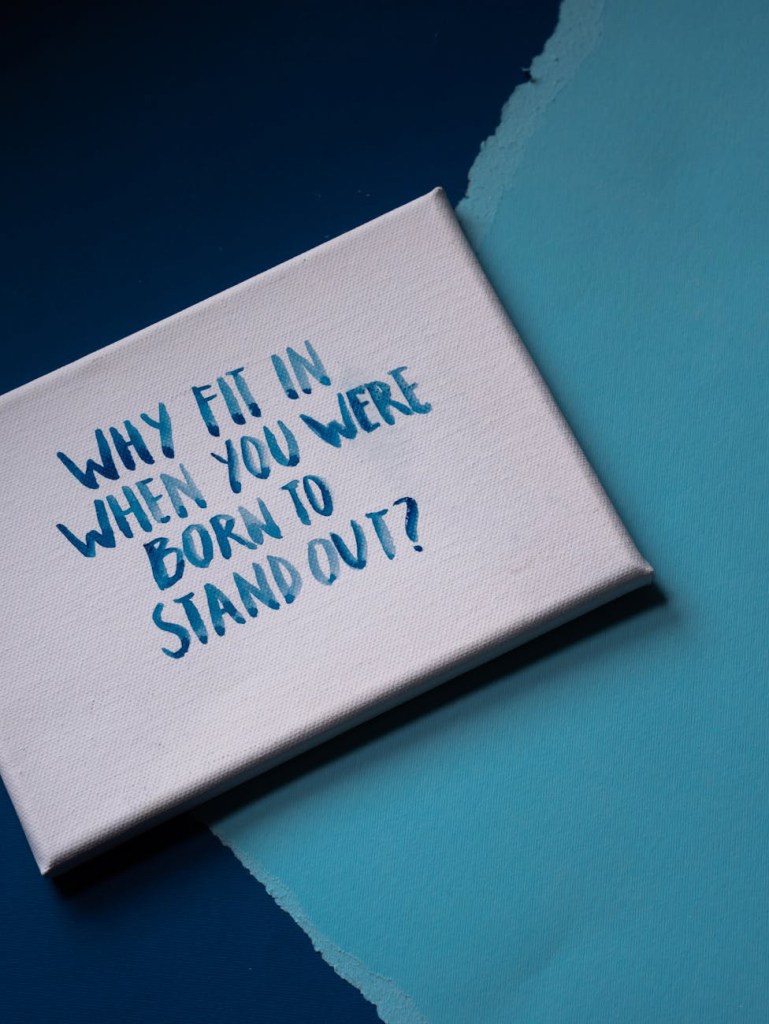
Having two daughters with autism has been a crash course in emotional self-management. I knew so little when my daughters were diagnosed in their early teens and tweens. Even after the diagnosis, and so much therapy, reading, observing, reflecting, ASD remains an unknown landscape. I was born on the Oklahoma flatlands. My daughters were born in the craggy craters of another planet- at least that is the way it seemed. Here are some of the surprising learnings for me.
Autism is less about disconnection than being over connected. In the early days of research, scientists focused on boys with autism. Some researchers even questioned whether girls could have autism. Boys with autism tended to be emotionally remote (at least seemingly so) and uncomfortable with touch. In my own experience with my daughters, remoteness or disconnection isn’t accurate. Instead, my daughters have struggled with autonomy- meaning, they have struggled to identify whether an emotion is one of their own or someone else’s. They are emotional vacuums, sucking up every emotion around them. They observe the tiniest change in voice tone, body angle or even internal registration. This level of awareness is incredibly exhausting. Just imagine if you were able to feel the emotions and thoughts of every person in a crowded room. This is how I see my daughters’ experiencing ASD. It’s as if they are huge stamens attracting millions of buzzing bees. The noise is deafening, and scary too.
My daughters are as sensitive as race horses bucking the starting pen’s confines. Race horses wear blinders to limit field of vision and focus on what’s ahead. My daughters retreat to their safe spaces- their rooms- to reduce the stimuli. If they cannot retreat, they anger quickly. From the outside, this looks like disconnection or isolation. But really, it’s self-preservation. So much stimuli is zooming in that they have to shut down.
Another feature of ASD I had not known is what can seem lack of empathy. Some medical researchers believe that people with ASD do not have empathy. The reality is more complex. Some with ASD do not understand empathy in an abstract or cognitive sense. Let’s use a stubbed toe as an example. When I was at the grocery store, I tripped and ran over my foot with my own cart. It really hurt. If this happened to me and I related this story to my daughters, they may show no response. They weren’t present for the event. However, if they were with me, they would automatically absorb my experience and feel my pain. This is the very definition of empathy- the ability to feel another’s pain. The difference is one is a story of something that happened. The second is co-experiencing what happened.
The unexpected anger also has confused me. I cannot predict what will trigger an outburst. My older daughter and I were recently watching Yellowjackets, a show about a female soccer team stranded in the Canadian Rockies. We were almost at the end of the first season when my daughter flared in an emotional rage. I thought the trauma of the relayed incident had triggered her, but that wasn’t the case at all. She was frustrated by a poorly written, stereotypical and predictable plot. She told me exactly what would happen on the last few episodes, and she was right. She was angry that the writers were so lazy to fall upon stereotypical tropes that ruined the value and quality of the story. This is how anger can pop at unexpected moments.
I am less surprised by their prediction abilities. They see patterns- human and otherwise- quickly. Is it fortune telling? How did my daughter know season 1 would end the way it did? My younger daughter gets easily bored in college classes for the same reason. Why can’t college lectures introduce something she doesn’t know? I dissect her statements; she can’t possibly know what the teacher is going to lecture about. But then she proves me wrong.
This is one reason I found The Telepathy Tapes podcast so fascinating. I’ve written about this podcast in a previous blog, but quick summary- it posits that non-verbal- indeed most- people with ASD have telepathy capabilities. These non-speakers live in an ethereal realm, unconcerned with daily life rhythms. My daughters also seem this way sometimes, especially my older one. We could be sitting outside watching the birds and she’ll suddenly relay in astonishing detail, for hours, the entire history of the zipper or the heel. When she was younger- around 4- she would “remember” things she had never learned- such as calculus.
Many of the uncanny things she “remembered” are no longer with her. The world pushes normal and crushes the uncanny. More than one teacher clamped down the unexplained extraordinary. My younger daughter, who is less verbal, skimmed below the “normal” rim, just enough that her talents were missed. The effort to disappear was too enormous, however, and she would come home and fall apart. She had no words for her experience, and she was undiagnosed at that time. In fact, neither daughter was diagnosed then.
My other ASD “surprise” has been the accompanying anxiety and depression. I’m not sure why I didn’t expect this- perhaps because of the inappropriately labeled non-emotional ASD feature. Now I see it as a byproduct of knowing too much, feeling too deeply, being too enmeshed and connected. As their mother, I’ve begun to see my own neurodivergence from a young age. In my time, no label existed other than “slow,” or “low I.Q.” or worse (forgive me) “retarded.” If my mother had not fought for me, I would have landed in the class for these students. But like my daughters, I struggled with anxiety and depression.
Autism is not a handicap. It’s not a “less than.” Give me an auditorium of ASD humans over one neurotypical. Neurotypicals have ego, arrogance, politics. ASD is blessedly free from such human depravity. At least, this is my experience. In fact, I think we humans have gotten it all wrong. The special humans , the real people, have ASD or some other neurodivergence while the “typical” with their meanness and ugly intentions are neurowrong.
I would love to hear from you, even if, especially if, you disagree. Perhaps we can bring back the American tradition of debate.
Please like and share this blog with others. Subscribe to receive it by email and go directly to the Walk the Moon website to peruse the full collection of articles and updates. You can email me from the Walk the Moon website as well.
 Walk the Moon