Raising Autism 301
I have a family member who has a perfect child. By perfect I mean socially, physically, intellectually, creatively, emotionally, naturally ideal. She was a straight A student, played the violin at almost a prodigy level, is perfectly formed according to modern ideals, absolutely gorgeous, sweet, unaffected, thoughtful, loyal, dynamic. She has no neurodivergence other than her natural brilliance- and that’s the kind everyone wants. Her work ethic is unrelenting. Her emotional demeanor even and without drama. Her friendships deep and true. About the worst you can say is that she has flat feet which hurt her sometimes, and that’s not really a fault or anything within her control.
Imagine, then, my own “imperfect” children against this relief. Our children grew up together. As much as my daughters struggled, she excelled. She coasted through some pretty significant life tragedies, while my daughters stalled and stumbled through similar ones. She has made and maintained friendships from childhood into adulthood. My daughters have both experienced deep betrayals, bullying and cruelty. How can one not notice the comparison? The exceptionality of one and the challenge of the other? I want to be clear: this amazing young women has worked hard and fairly achieved everything she has done. She deserves recognition for her achievements. She is a special human being.
I may sound jealous, but I’m not. I love this perfection of genetics as much as I love my own daughters. I celebrate her successes and will always do so. It’s the otherness that bothers me.
My daughters are a study in otherness. My daughters’ difference, unpredictability, emotional dysregulation, neurodivergency, unusual preferences and paths. The entire point of otherness is that it sits outside of social standards, measures, concepts and perspectives. Otherness manifests because the norm exists. And the norm has a scale from “I’m just making the norm, but I’m there” to “I’ve mastered it” to “I’m the epitome of it.” These children have uninterrupted school days, lunch times, friends, afterschool activities, sports, clubs, troops. They have the norm kid life.
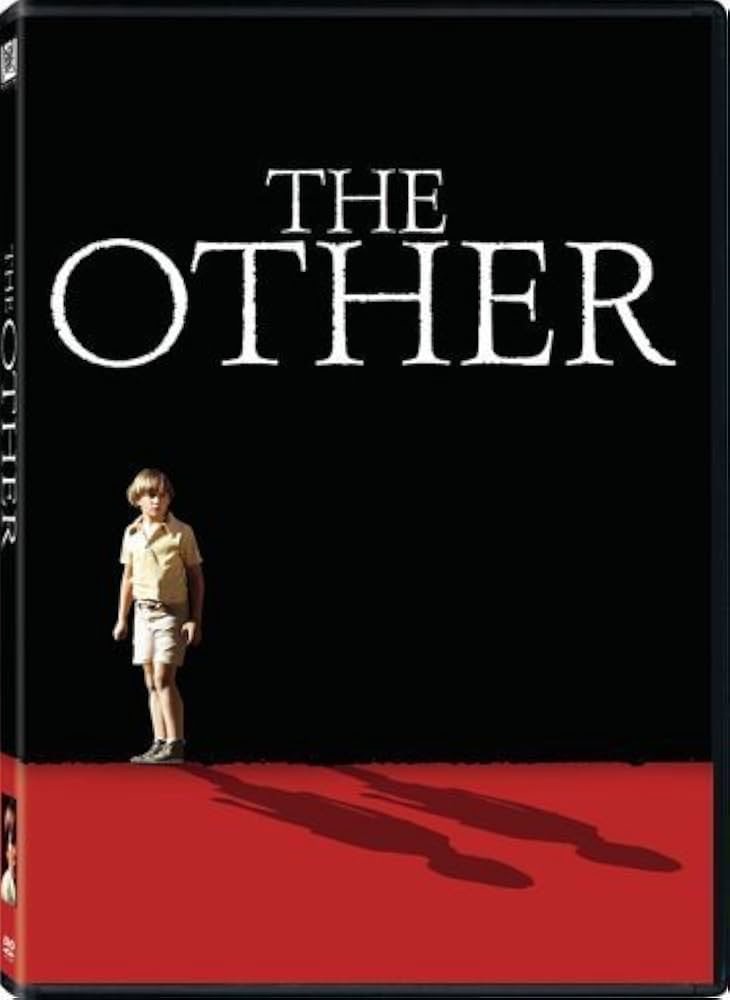
Do you remember the movie, The Other? (Not to be confused with The Others 2001 film with Nicole Kidman.) The Other (singular) is a 1972 horror film about identical twin brothers in a small farming community in the 1930s. Their father has died and while their mom grieves, their grandmother cares for them. The grandmother teaches one twin a special psychic power, and then weird, scary things begin. The horror of the movie comes not so much from the actions of the “demonic” twin- he does keep a severed finger in a box, which is gross- but from the comparative innocent and normal world around him. The other twin is a good, though mischievous, child (mischievousness is ok). We really like the “good” kid. As the movie plot builds, the extremes become even more pronounced. It’s the non-normative kid who is the bad one. And he becomes very bad.
This is the other in our society too. Normal and exceptional kids alike seem even greater, smarter, talented, more special against the relief of kids who do not fit the mold. The comparison alone effects the definition and distinction.
The difference is given names- ASD, ADHD, unspecified learning disorder, defiance, bipolar, antisocial, sensory disordered. The list goes on and on. These kids are pulled from regular classrooms outside of which their otherness becomes more apparent. This simple move changes access to friends, to clubs, to activities around and after school. Play soccer? Well, no, we have speech therapy, occupational therapy, mental health therapy. We also have to manage the “I know I’m different but pretended I wasn’t all day” breakdown after a full day of school. Just think how exhausting it is for a developing brain to pretend, or try to pretend, normality all day. Self-confidence, self-esteem and self-worth- all are irrevocably damaged.
I am extremely grateful for the school services we received. Those services helped my own children keep apace or at least not fall too far behind. Those special education teachers always saw the good, the beauty, the potential. Thank god for those accommodations, which, I have to note, are at risk if Project 2025 comes to fruition because it ends or severely guts the Department of Education.
I don’t have a solution to suggest. I wish I did. My daughters needed those accommodations, those special teachers, those after school therapies.
My goal is to raise awareness. To help parents of both kinds of kids to see what I see: it’s not the parents themselves who create the norm or the other. It’s the luck of genetics, of circumstances, of pregnancy health and dynamics, of definition, of social class and expectations. We get what we get and we deal with it. We celebrate what we get either way- at least we should. We find solutions either way- at least we try. We are all parents doing the best we can with the raw materials given to us.
I believe neurodivergence is as much a gift as brilliance. It’s our comparative culture, our social judgment which makes one better than the other. That’s on each of us. So stop it. Stop the good kid/ bad kid stuff. This isn’t a 1970s horror movie about demonic powers. This is life. You get what you get, and you do what you can.
Celebrate all children. Because they all are worth it.
 Walk the Moon