Into the Wilderness: Story 8
Night comes suddenly in the Blue Ridge mountains. One moment, the branches cast lacy patterns on the ground and the next they are barely discernible hulks in the inky air. We sat at the camp under the main tent, the rock-bound fire snapping in front of us.
The girls sat in a semi-circle around the fire. They sat with their legs bent, heads resting on knees. Or hunched over, curled into themselves like a shell. Or leaning back, outstretched, hearts to the dark sky. However they sat, they shared.
One girl had lost her mother. She was sad. But grateful for the friend who had carried her pack on the backwoods hike.
A heavy-set girl who had been bullied by classmates had refused to help clean up. She now realized that was the way she pushed everyone away. She was grateful for being here without being judged.
A teen in transition had just gotten to the final level and balanced on his trail chair. He was going home soon, and he was going home being who he was.
One girl, her sharp fake nails still polished, picked her fingers through her long, tangled hair and cried. The circle hushed around her, waiting. She was new. She missed her parents, her brother, her dog.
Slowly, they took turns, grappling with issues most adults would avoid. They listened, comforted, challenged. Out here in the woods, they couldn’t get away with being fake. There was no make up to hide grief, no skimpy clothes to distract from pain. There was nothing to disappear into.
After, the girls stood. They gathered up and packed away any remnants of food, stuffing it into canvas sacks. They carried the bulging bags away from camp, scouting trees. It was time for bear hang.
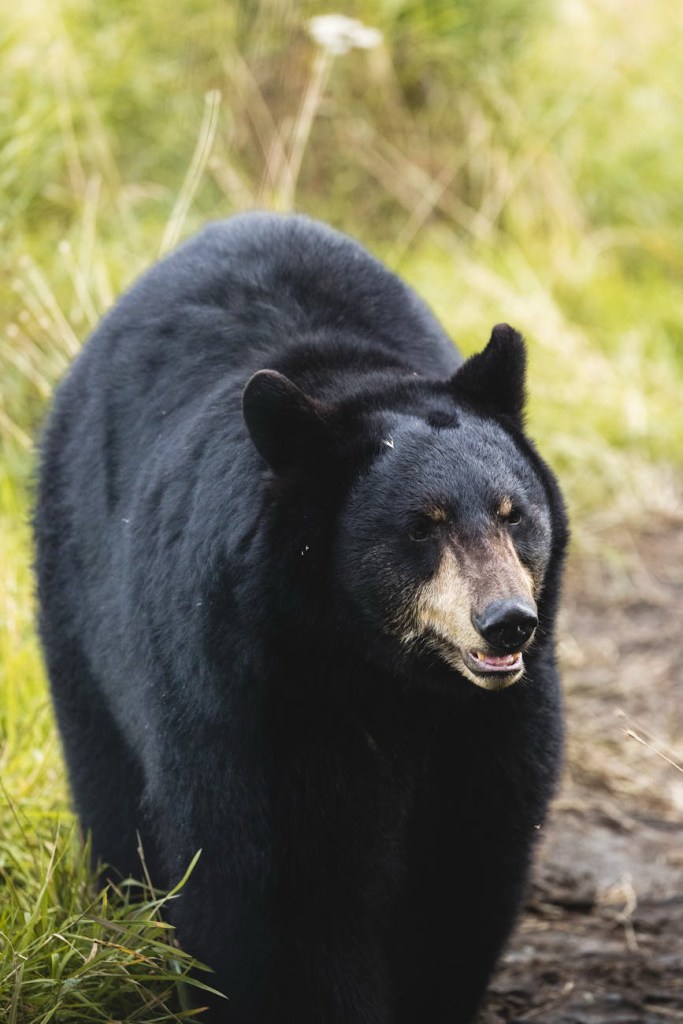
Just over 200 feet away, they stopped. A girl tied a rope around a rock and hurled it between a high fork. The rock’s ricochet resounded through the forest and then the rope uncoiled downward, appearing suddenly out of the darkness as if it had come from heaven. They looped the enormous bags one after another through the rope, making sure they were tightly knotted. In a camp of 12 girls, additional counselors and field guides, there was a lot of food to protect from the keen noses of black bears.
Then, seamlessly, together, they all grabbed hold of the rope and hoisted the heavy sacks upward, pulling down and out toward the trunk of another tree. There, they wrapped the rope around the trunk several times, then pushed it through the bands into a tight slip knot. The sacks dangled more than 12 feet overhead, suspended between two trees, swaying in the night breeze.
A bear hang is a system of cords, sacks and carabiners used to suspend food in a tree. But, watching them, I could see it was so much more. It was ritual. It was community. It was the strength they were building within themselves. The simple act of protecting their food had turned into an opportunity to learn who they were and how to get along in life. Everyone participates in bear hang. All these rebellious teens, and not one questioned the need to work together.
With each muscled pull, working in unison, they heaved a new sense of self. Each pull carried a message: “I can do this. I can do this.” They didn’t say that, of course. Instead, they joked. They slapped each other on the back as if they’d made a rugby goal. They jostled and giggled. But it was there in the night air. It drifted through the trees and wafted with them as they dispersed up the hill to their tents. It wrapped around them as they lined up for meds and as they stepped across the uneven terrain to their sleeping bags. It was there as they counted out the good night. One. Two. Three. Four. All the way to twelve. It was there and unmistakable: Hope.
 Walk the Moon